Tuesday, 14 August 2012

Chocolates and Shrink Wrapping

 The worst thing that can happen is that you have a product that you want to sell, and then, the product gets damaged.  It became especially troublesome with heat, and items that melt instantly. There are a lot of confectioners that worry about packaging their chocolates with shrink wrapping.  This is because shrink wrapping does require some heat to melt these, so it’s a concern that is founded.

But there are different ways to prevent this, and luckily, you can use chocolate with shrink wrapping, without melting. 


Before you start this, here’s a few things that you want to consider. 

Type of Film 

Different films used to shrink wrap items do require a variety of exposure, and heat settings. 

Polyolefin and PVC are the two most common types, and when it comes to food, you’ve got to use polyolefin if there’s direct contact.

Most of the time, when it comes to PVC, you need to get the temperature around 250-270 degrees. This is usually done in less than five or so seconds of heat when they’re in the tunnel. 

With 75 gauge polyolefin wrapping, you do need to crank this up to about 350, or around 300 for the seal, but again, it’s there for less than 5 seconds, so they should be fine. 


Thickness of Film 

Another thing that you need to keep in mind is the film thickness. It’s normally around 75 gauge, and this is the best for wrapping different chocolates and other products. 

This is usually required due to the nature of these bigger products, and the stress of the transport after they’re packaged.  Many times, people will wrap pounds of chocolates, and they need a shrink film that’s thicker. 

You also need to factor in as well as how many times they’ll handle these products after the packaging is done.  If there’s more chance of them being handled, use something thicker.  Usually, thicker types of shrink film do require a longer level of heat exposure. 

Type of Element for Heating 

Finally you do need to figure out the right heating element as well, as you want to seal this in a way where the product gets sealed, without the melting process occurring.

You want to make sure that it shrinks it down, and be careful, so that it doesn’t create product damage. 

Usually, this is a rarity for shrink tunnels, because thick types of film usually don’t need to be around heat for a while.  
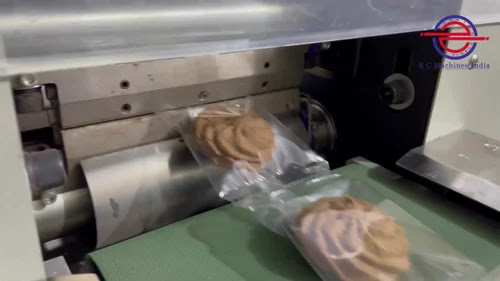


Heat guns are where the damage happens, because while they’re good for lower levels of output, if you keep them in one specific location, it can cause some damage. Not to mention, in order for this to make a seal, the gun needs to be on it for up to a minute, so you should be mindful of that. 

There are videos however that show a lot of the impacts of heat sealing, and how long it would take for something to melt within a shrink film.  You should watch these before you start, so that you can figure out if you need to be mindful of the heat shrinking, or if you are fine with the current setup that you have currently, since it can play a part in the overall impact of this.

Shrink wrapping chocolate can be a bit of a challenge for confectioners, but the beauty of heat sealing is that there is always a chance that you can create a lasting seal. Here, we went over some of the things to keep in mind, and what to make sure you’re abreast of when choosing the correct sealing.


Tuesday, 10 February 2009

Hybrid Packaging for the Omni-Channel retailer

Packaging that’s being used for multiple purposes is becoming popular. One sort of packaging is one that’s designed for both physical and retail shelves, along with direct-to-consumer forms of shipping that’s there too. 

You’d be surprised at the different hybrid packaging that’s used to create a better channel, and really enhances your own packaging experience and usefulness too. 

The Key features of Hybrid Packaging 

Hybrid packaging has some usefulness to it., and we’ll go over each of the features that’s here.   One is the dual-layer designs that are used for aesthetics appeal, and the durability of shipping.   So you’re not only getting something that looks good, but also something strong that will last the harshness of shipping to customers, or being battered on the shelves. 


The applications 

Hybrid packaging has a boatload of applications that come with this.

The first is electronics.   You want to make sure that with these electronics, you’re giving them something useful, and will also look good on the shelves. 

Another benefit and application is cosmetics. Cosmetics are booth bought online and offline, so having packaging that fits omni-channel retailing is good.

Finally, subscription boxes. While they’re mostly an online thing, some people do have brands and boxes that are available in stores, which will in turn make it even better for you, and makes it easier to keep the packaging where it needs to be. 

The benefits 

The cool thing about hybrid packaging is that there’s a reduction of the need for different packaging designs. You don’t have to design one for the shelves and one for the warehouse to ship, so it streamlines the supply chains. Lots of people prefer this, because it costs a whole lot less, and many times, is faster than if you have to make different packaging, for each experience. 

The challenge 

While hybrid packaging is catching on, there’s a few drawbacks to it. one, you need to design the packaging so that it looks good. Usually, when it’s being shipped to customers, there’s consideration for making sure that it creates a good unboxing experience, but there’s also the factor that shelf appeal is a bit more in a customer’s face than unboxing. However, designing something that optimizes this is good.


You also need to make sure that whatever you use will work with the shipping standards that are in place.   Making sure that it can handle the robust complexities of shipping is something so many companies have to also look at too. 

The future of This Packaging 

Hybrid packaging is something that’s becoming more and more optimized for the brand. With dimensions being tested by AI and algorithms, you can make it so that the item fits securely, regardless of where it’s going.

Some of the smart packaging initiatives have gone a step further. They adjust the content based on the destination, whether retail or shipping. While this might seem like such a small thing, it’s huge for so many businesses. This type of packaging really is the future, and provides customers with different channels for retail.


Being able to offer different packaging for each experience might not seem like much, but in the grand scheme of things, it can make or break a company. Offering new ways for your packaging to grow and become even better is something brands love to do, and with hybrid packaging, you’re able to get it to the destination that it needs to go, and have it properly optimized, no matter what type of packaging experience you’re looking to have, and where you want to begin too.


Monday, 10 March 2008

Shape Memory Packaging that Returns Items to their Original Form

 Shape memory materials are becoming popular in packaging experiences. With this, you can create packaging that fits exactly as you want to, and once you’re done with it, it returns to the original type of container. It's a pretty color, because it offers some unique benefits that packaging might not develop otherwise. 

The Process 

How this works is simple. It’s essentially packaging that collapses for storage reasons, but then will expand back up when exposed to light, heat or moisture. While it might be a flat box right now, when the right elements are implemented, it becomes the box that will house the items. 

Again, a simplistic process, but when you have packaging that does this, it can offer worthwhile solutions. 


Applications 

A very common one is reusable shipping containers. If you have a process where people can return the items, then they’ll be able to use this, as it’s reusable, and improves the way in which items get returned, as it can offer multiple uses. 


Another one is expandable retail packaging, where the packaging grows when it’s on retail shelves, but stays pretty small otherwise. again, offers better storage for those moments you need it, until the time is right.

Finally, there’s flexible food solutions, such as food containers that can model and change based on these items inside, and then when you’re one, it returns to the original form. While not common, it’s becoming a means in which companies are able to bring forth packaging that they can enjoy. 

The benefits of This 

With this type of packaging, you reduce the waste by a lot, especially if the items are reusable. A lot of reusable packaging does save the planet, and reduces your carbon footprint. Some companies that have an ecofriendly focus also may mention this, because it offers a wealth of benefits you might not get otherwise. 

It also minimizes the storage space.   For smaller businesses, reduction of this is important, because you’re not wasting time and space trying to accommodate all of these items, but instead keep them all in one place. 

Finally, it enhances the reusability of the items. A lot of times, with this type of packaging, you can encourage reusability of the times, and in turn, will help to improve your overall results. 


So yes, with this type of packaging, you’re offering a more immersive, better experience that will really improve a customer’s overall view of the items inside, and how you as a business handle them. 

The future of This Packaging 

This type of packaging has a lot of unique changes and ways to really stand out and improve the experience of your packaging. 

There's now smart packaging that will automatically reshape the items based on the environmental conditions. So if the packaging gets too warm, or too cold, it can be reshaped to fit the needs of the item that’s inside. 

Overall, this type of packaging does offer an enhanced, functional experience that will really involve and excite many customers. When you have shape memory packaging, you’re not just helping the items get to their original form, you’re also improving the ability of the items inside as well to improve the experience of customers. By doing this, you’re giving them not just a better reusable experience, but also a safer, secure packaging that will in turn, make it even better for all parties that are involved, and really enhance the experiences that you get not just from one package, but from the future packages that use this type of means to protect as well.


Why Saying Things with a Box is Better than Ever

  Packaging is not just a straight approach, but rather omnichannel.  A lot of marketers have heard of this, but this is something that has ...